


ICEBERG Program · Initiative assessment
The objective first. Then the technology.
Every technology initiative must answer to a strategic need. This is how we assess what to build, prioritize value, govern deliveries and verify progress.
Our criteria
- Decision
- We build when there is a real need and an objective to drive.
- Team
- Technical capabilities are defined per project: your team, your vendors or a focused intervention.
- Follow-up
- Weekly commitments, owners and evidence in LIDERYA Platform.
The strategic value filter
Three questionsbefore building a solution.
Not every need calls for technology development. Before approving an initiative, we check that it has a clear objective, an assessable result and an owner for its adoption.
Which strategic objective does it contribute to?
Every initiative must answer to a concrete priority. If the objective is not clear yet, that lack of direction has to be resolved before defining a technology solution.
How will we measure its contribution?
From the start, we define which result or indicator should change. That way we assess the project by the value it adds, not just by the features it delivers.
Who will be accountable for its adoption?
A solution nobody builds into operations rarely creates value. That is why we define who will drive its adoption within the organization.
The process
From the need to a capability that stays.
Four steps. Scope, deliveries and timelines are defined by the assessment's findings and the real needs of each project.
Step 1
Technical assessment
We understand the objective, the systems, the processes and the existing constraints. We identify what is holding progress back and determine whether technology is the right answer.
Step 2
Design tied to the objective
The solution is designed from the expected result. Scope is prioritized by strategic contribution, starting with what creates value and leaving out what does not justify itself.
Step 3
Implementation with verifiable deliveries
Deliveries the team can review and use. Every step forward is checked against weekly commitments and concrete evidence. The building can stay with your team or your vendors, with LIDERYA governing the initiative.
Step 4
Capability transfer
The solution is documented and the team is prepared to run it. The goal is for the technology capability to stay in the organization beyond the project.
In all honesty
When it makes sense, and when it does not.
Building technology is not the answer to every problem. Validating the need before building protects the investment and avoids projects with no strategic impact.
When it makes sense
- There is a clear strategic objective that a technology solution can drive.
- The initiative is held back by a lack of tools, data integration or technical capability.
- There is an internal owner who can drive adoption of the solution.
- It is possible to define how the expected result will be assessed.
When it does not
- The organization still needs to define its priorities: strategic direction has to be resolved first.
- An existing tool can meet the need without building a new solution.
- The aim is to build software without a clearly defined objective or expected result.
- The main obstacle is a lack of follow-up and execution discipline, not technology capability.
How you will see progress
Nothing is marked as donewithout evidence.
Every project is governed in LIDERYA Platform and connected to the objective it must drive. Leadership checks commitments, reviews progress and spots deviations to decide in time.
- Weekly commitments
- Concrete deliveries, defined owners and priorities the team can see.
- Evidence
- Progress shown through deliveries that can be reviewed and used, not unsupported estimates.
- Confidence Level
- A reading of how likely commitments are to be met, to anticipate risks and act in time.
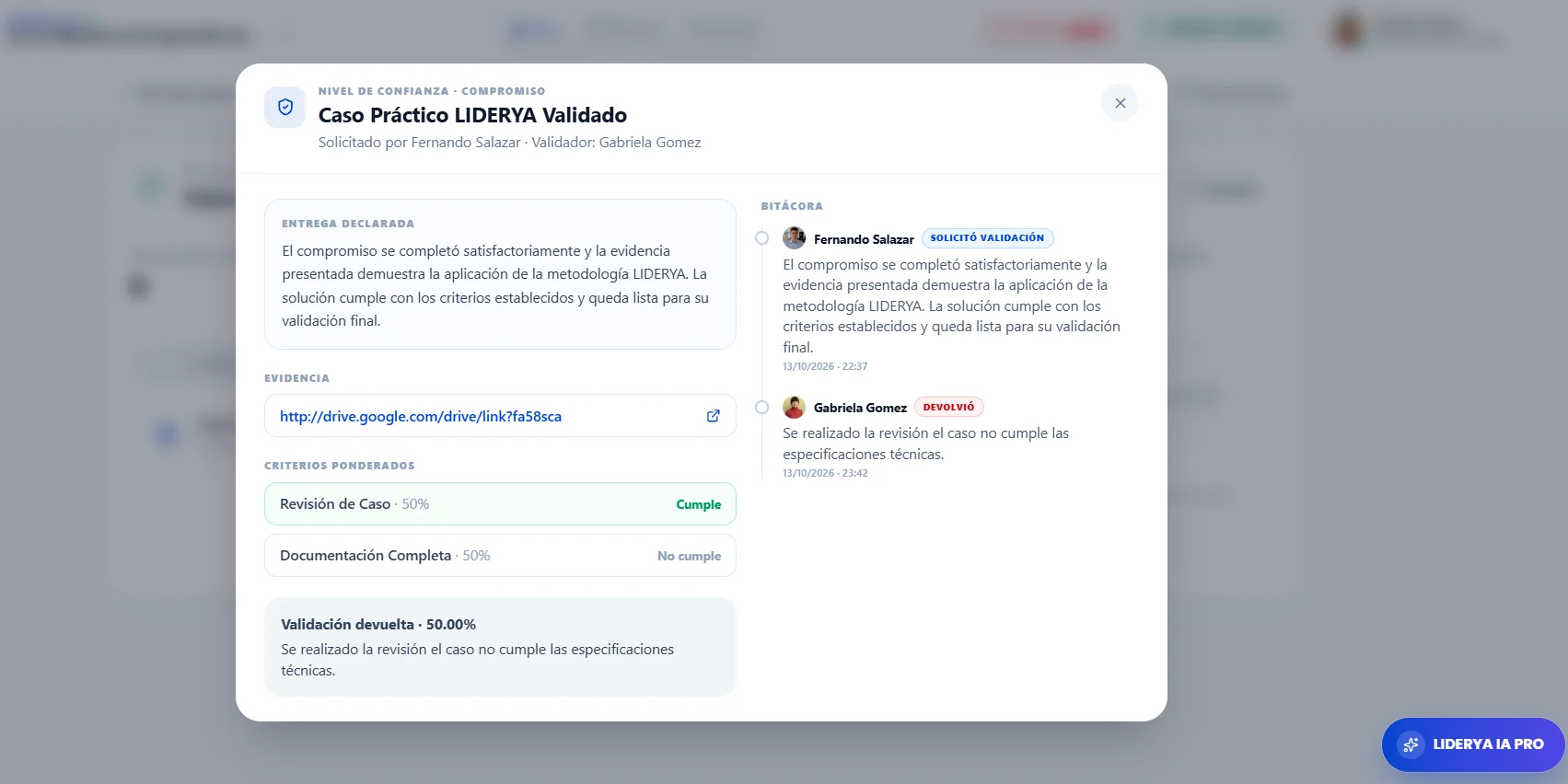
Delivery is only part of the result: the capability must be possible to run and keep adding value.
Go deeper
Building capability is a strategic decision.
A complementary perspective on the capabilities an organization needs to develop and how to prioritize the decisions that drive its strategy.
Reference video from Harvard Business Review. Language: English. Not a LIDERYA production.

Primer paso
Before building, let's validate what you need.
Tell us which initiative is stalled, which objective it must drive and what is holding it back. We will advise you on the best path, even if building technology is not the answer.